

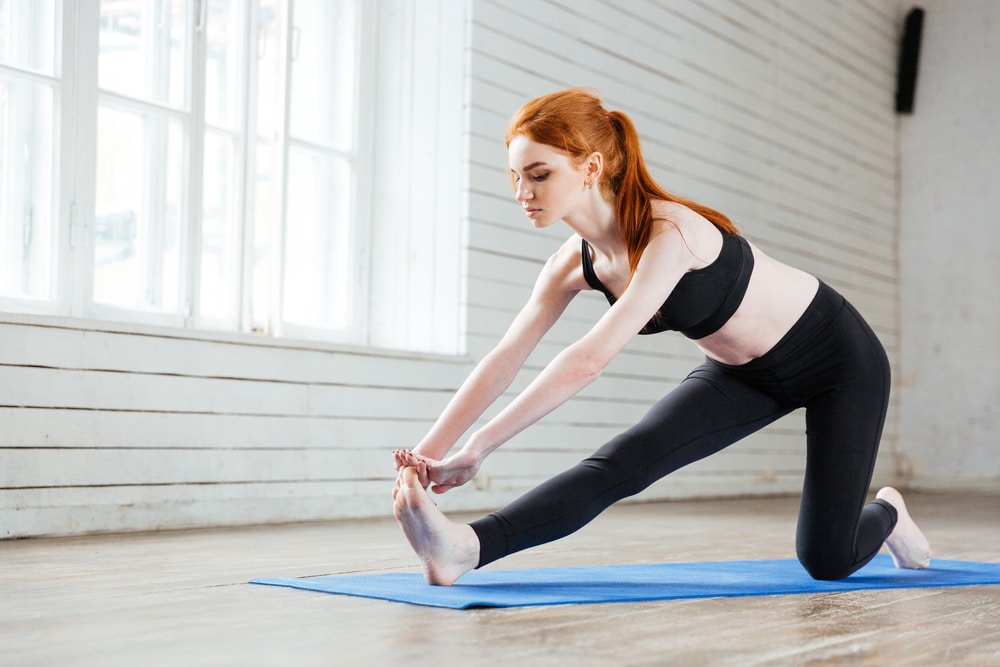
Flexibility is the ability of your joints and muscles to move through an unrestricted, pain-free range of motion. Modern daily routines, often dominated by prolonged sitting at desks or looking down at screens, cause muscles to shorten, tighten, and lose their natural elasticity. Incorporating a deliberate, well-structured stretching routine into your daily schedule counters these physical adaptations, reduces joint stiffness, and significantly improves functional mobility for everyday tasks.
The Physiology of Muscle Lengthening and Mobility
Muscles are composed of bundles of muscle fibers containing units called sarcomeres. When you stretch, sarcomeres elongate, and the surrounding connective tissues, known as the fascia, adapt to the increased tension. Sensory receptors within the muscle belly, called muscle spindles, monitor changes in muscle length and rate of stretch. When a muscle lengthens too quickly or too far, the stretch reflex activates to contract the muscle and prevent injury.
Consistent, gradual stretching trains these receptors to tolerate greater elongation before triggering a protective contraction. This adaptation increases tissue compliance and expands your active and passive range of motion. Increased flexibility also encourages synovial fluid production inside joint capsules, lubricating the articular cartilage and decreasing mechanical wear over time.
Key Principles for Safe and Effective Stretching
Achieving measurable improvements in flexibility requires following basic physiological rules rather than forcing the body into extreme positions.
-
Warm Up Prior to Stretching: Cold muscle tissues possess lower elasticity and higher viscosity, making them more prone to micro-tears. Spend five to ten minutes engaging in light aerobic activity, such as brisk walking, marching in place, or gentle arm circles, before holding static stretches.
-
Control the Tension: A stretch should produce a mild pulling sensation along the targeted muscle group, never sharp, pinching, or stabbing pain. Pain indicates tissue strain or joint compression, which triggers the stretch reflex and defeats the purpose of the exercise.
-
Maintain Steady Diaphragmatic Breathing: Holding your breath triggers the sympathetic nervous system, causing muscle fibers to tense up. Inhale deeply through your nose and exhale slowly through your mouth to stimulate parasympathetic relaxation, allowing the muscle to release deeper into the stretch.
-
Prioritize Consistency Over Duration: Practicing a ten-minute stretching routine five days a week yields far better tissue adaptation and flexibility gains than stretching for an hour once a week.
Essential Upper Body Stretches
Upper body tightness typically concentrates in the pectoral muscles, anterior deltoids, upper trapezius, and latissimus dorsi due to rounded-shoulder postures.
Chest Opener at the Wall
This movement opens the anterior chest wall and lengthens tight pectoral muscles that pull the shoulders forward.
-
Stand perpendicular to a wall, roughly an arm length away.
-
Place your right palm flat against the wall at shoulder height, keeping your arm extended or slightly bent at the elbow.
-
Slowly rotate your torso and feet to the left, away from the wall, until you feel an opening across your right chest and anterior shoulder.
-
Hold the position for 30 seconds while breathing evenly.
-
Step back, switch sides, and repeat on your left arm.
Overhead Triceps and Latissimus Stretch
Tight lats and triceps restrict overhead reach and limit full thoracic spine extension.
-
Stand tall with your feet shoulder-width apart and your core engaged.
-
Lift your right arm overhead, bend the elbow, and place your right hand on your upper back between your shoulder blades.
-
Reach across with your left hand, gently grasping the right elbow.
-
Apply light pressure to draw the right elbow slightly behind your head and down toward your spine.
-
Hold for 25 to 30 seconds, maintaining an upright torso without arching your lower back, then switch arms.
Cross-Body Shoulder Stretch
This stretch targets the posterior deltoids and the external rotators of the rotator cuff.
-
Stand or sit with your spine neutral and shoulders relaxed.
-
Bring your right arm across your chest at chest height.
-
Hook your left forearm under your right arm, pulling the right arm closer to your chest.
-
Keep your right shoulder pressed downward away from your ear.
-
Hold for 30 seconds, then switch to the left arm.
Essential Lower Body Stretches
Lower body tightness directly impacts gait mechanics, pelvic alignment, and lower back comfort. The following movements target the hips, hamstrings, quadriceps, and calves.
Standing or Lying Quadriceps Stretch
Prolonged sitting keeps the quadriceps in a shortened position, which pulls the pelvis into an anterior tilt.
-
Stand near a sturdy wall or chair for balance.
-
Shift your weight onto your left leg with a slight bend in your left knee.
-
Bend your right knee, bringing your right heel toward your glutes, and grasp your right ankle with your right hand.
-
Align both knees side by side, keep your chest lifted, and gently tuck your pelvis forward.
-
Hold for 30 seconds, feeling the pull along the front of the right thigh, then switch legs.
Supine Hamstring Stretch
Stretching the hamstrings from the floor supports the lumbar spine and isolates the posterior thigh.
-
Lie flat on your back on a mat with both legs extended.
-
Bend your right knee, interlace your fingers behind the back of your right thigh, and lift your leg toward the ceiling.
-
Slowly straighten your right knee until you feel tension in the back of your thigh. Keep your left leg flat on the ground with your foot flexed.
-
Hold the stretch for 30 to 45 seconds without letting your hips lift off the floor.
-
Lower the leg smoothly and repeat on the left side.
Half-Kneeling Hip Flexor Stretch
The psoas and iliacus muscles become chronically tight from prolonged sitting, pulling directly on the lumbar vertebrae.
-
Kneel on a cushioned mat, stepping your right foot forward so your right knee is bent at a 90-degree angle directly over your ankle.
-
Place your hands on your right thigh or hips for support.
-
Squeeze your left glute and shift your hips slightly forward while maintaining an upright torso. Avoid hyperextending your lower back.
-
Hold for 30 seconds to open the front of the left hip, then switch positions.
Wall Calf Stretch
Ankle dorsiflexion relies on flexible gastrocnemius and soleus muscles, which support healthy knee and ankle mechanics during walking and running.
-
Stand facing a wall about two feet away. Place your hands on the wall at shoulder height.
-
Step your right leg backward, keeping the right leg straight and pressing the right heel firmly into the floor.
-
Bend your front left knee and lean your weight forward into the wall until you feel a firm stretch in the right calf.
-
Hold for 30 seconds, ensuring your back toes point directly forward, then switch sides.
Essential Core and Spine Stretches
Spinal mobility requires gentle articulation through flexion, extension, and rotation.
Cat-Cow Dynamic Stretch
This gentle dynamic flow warms the deep spinal erectors and mobilizes the entire vertebral column.
-
Begin on all fours on your mat with hands under your shoulders and knees under your hips.
-
Inhale, drop your belly toward the floor, lift your chest, and look slightly upward for the Cow position.
-
Exhale, press the floor away, round your spine upward toward the ceiling, and tuck your chin toward your chest for the Cat position.
-
Flow smoothly between these two shapes for 8 to 10 complete breath cycles.
Child’s Pose
Child’s pose lengthens the lower back, broadens the sacrum, and gently opens the hips and shoulders.
-
From hands and knees, bring your big toes together and widen your knees toward the edges of your mat.
-
Shift your hips back onto your heels while walking your hands forward along the floor.
-
Lower your torso between your thighs and rest your forehead gently on the mat.
-
Reach your fingers forward to lengthen your spine and hold for 45 to 60 seconds while taking slow, expansive breaths into the back of your ribcage.
Frequently Asked Questions
What time of day is optimal for performing flexibility exercises?
You can stretch effectively at any time of day, but body temperature peaks in the late afternoon and early evening, naturally increasing tissue suppleness and joint range. Morning stretching requires a slightly longer warm-up because resting body temperature and soft tissue elasticity are lower after sleeping.
How does proper hydration affect overall muscle flexibility?
Muscle tissue consists of roughly 75 percent water. When you are dehydrated, soft tissues lose volume, the fascia becomes less pliable, and internal frictional resistance rises, which limits tissue glide and increases the risk of cramping or micro-strains during a stretch.
Can stretching increase athletic strength or muscle power?
Stretching does not build contractile muscle fibers directly, but it removes structural limitations around joints. Improved range of motion enables muscles to recruit motor units throughout a complete path of travel, leading to better mechanical efficiency and force transfer during strength exercises.
What is the primary difference between dynamic and static stretching?
Dynamic stretching involves controlled, repetitive movements that take joints through their active range without holding the end position, making it ideal for pre-workout routines. Static stretching involves holding a single position at the end range for 20 to 60 seconds, which is best suited for post-workout cool-downs to lengthen resting muscle fibers.
Is it safe to stretch when experiencing acute muscle soreness?
Gentle, low-intensity stretching can promote local blood flow and reduce perceived stiffness caused by delayed-onset muscle soreness. Aggressive, deep stretching during peak soreness can cause additional damage to recovering muscle fibers and prolong recovery time.
How long does it take to see noticeable improvements in flexibility?
With consistent daily stretching or a routine performed at least four times per week, measurable improvements in joint range and tissue tolerance typically appear within three to four weeks, with significant structural adaptations occurring around eight to twelve weeks.
