

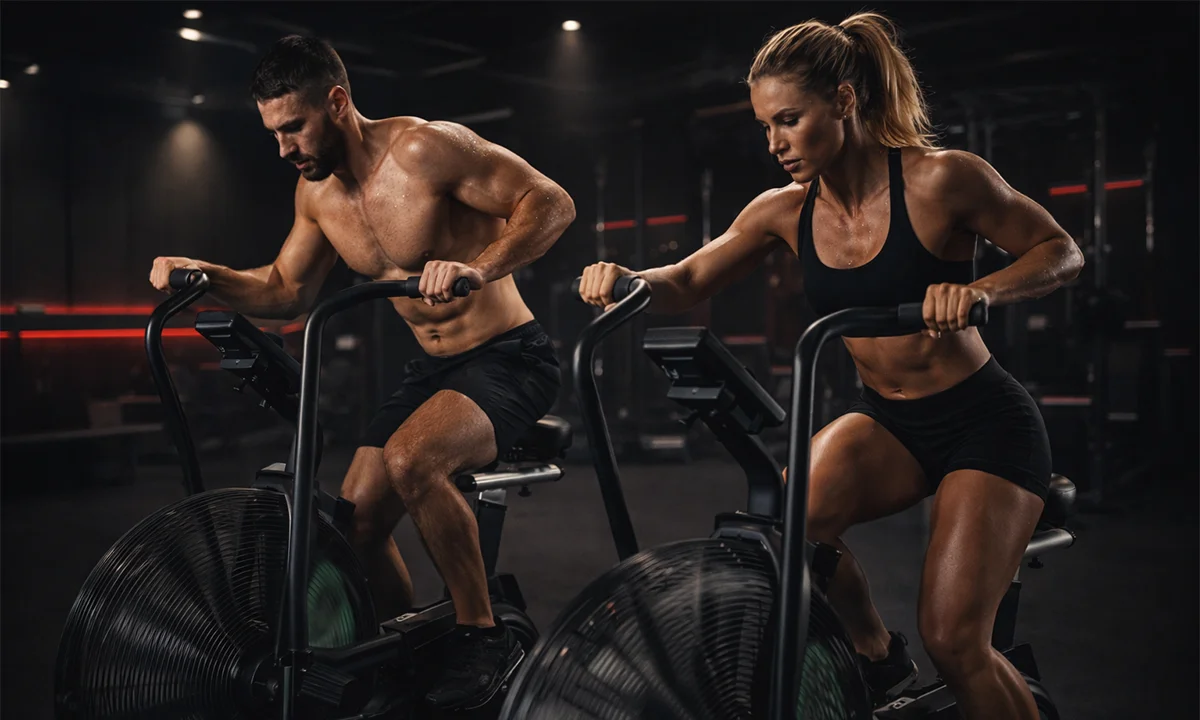
Cardiovascular exercise forms a vital pillar of general physical health, aerobic stamina, fat oxidation, and athletic endurance. Modern commercial fitness centers offer a diverse array of cardio machines designed to challenge the human cardiovascular system under various movement mechanics and joint loading profiles. Despite the ubiquity of these machines, many gym members fall into repetitive, low-intensity routines or execute improper biomechanics that blunt conditioning gains, increase joint wear, and reduce workout efficiency.
Using cardio equipment effectively requires more than stepping onto a deck and pressing the quick-start button. It demands an understanding of machine setup, kinetic sequencing, target heart rate management, and intentional programming.
Physiological Foundations of Cardiovascular Training
Optimizing machine-based cardio requires aligning your mechanical output with specific metabolic adaptations. Cardiovascular training targets distinct energy systems depending on duration, resistance, and speed.
-
Zone 2 Aerobic Base Building: This low-to-moderate intensity zone (roughly 60 to 70 percent of your maximum heart rate) prioritizes fat as the primary fuel source, drives mitochondrial biogenesis, and strengthens stroke volume in the heart. Workouts in this zone should feel conversational and are typically sustained for thirty to sixty minutes on low-impact machines.
-
Zone 4 and Zone 5 Anaerobic Conditioning: Characterized by intense, interval-based efforts exceeding 80 percent of maximum heart rate, this training taxes the glycolytic energy pathways, improves lactate clearance, and enhances maximum oxygen uptake (VO2 max). High-intensity intervals typically alternate between brief bursts of maximum effort and active recovery periods.
-
Progressive Overload in Cardio: Just as resistance training relies on adding weight or repetitions, cardiovascular adaptation requires progressive demand. This is achieved by systematically manipulating resistance settings, incline percentages, stroke rates, cadence, and total distance over weeks rather than keeping machines on identical factory presets.
Mastering the Treadmill for Power and Joint Longevity
The motorized treadmill is the most prevalent piece of cardio equipment, offering adjustable speeds and inclines that mimic road running or uphill hiking without outdoor weather constraints.
Biomechanical Alignment and Postural Form
A widespread error on the treadmill is clutching the front or side handrails while running or power-walking at steep inclines. Gripping the handrails artificially alters spinal alignment, diminishes core engagement, alters natural gait mechanics, and causes the machine console to overestimate caloric expenditure.
-
Maintain a Neutral, Upright Posture: Keep your head up, gaze directed forward, and shoulders relaxed away from your ears. Avoid looking down at your feet or tilting forward from the hips.
-
Use a Natural Arm Swing: Drive your arms forward and back from the shoulders with elbows bent at ninety degrees. Do not allow your arms to cross the center line of your torso.
-
Match Foot Strike to Velocity: Land with your feet directly beneath your center of mass rather than overstriding out in front, which acts as a braking force and transmits excessive impact through the knees and hips.
Program Strategies on the Treadmill
-
The One Percent Incline Rule: Outdoor running encounters air resistance and terrain friction that are absent on a flat, motorized belt. Setting your treadmill to a baseline incline of one percent provides a closer physiological match to outdoor running dynamics.
-
Incline Walking Intervals: For individuals seeking high cardiovascular stress without heavy joint impact, walking at speeds between 3.0 and 4.0 miles per hour at an incline of 8 to 15 percent generates substantial hamstring, glute, and calf activation while sparing knees from repetitive ground reaction forces.
Maximizing the Indoor Rower for Total Body Conditioning
The indoor rowing machine (ergometer) engages roughly 85 percent of the body’s musculature across nine major muscle groups, combining cardiovascular conditioning with posterior chain strength.
The Four-Phase Rowing Stroke
Rowing is fundamentally a leg-driven pushing exercise, not an upper-body pulling movement. Power delivery requires mastering the sequential flow of four distinct stroke phases.
-
The Catch: Begin compressed at the front of the slide with shins vertical, arms fully extended forward, wrists flat, and torso leaning slightly forward from the hips at roughly an eleven o’clock angle.
-
The Drive: Initiate movement by pressing forcefully through the balls and heels of your feet, keeping your arms straight and core braced. Once your legs reach roughly two-thirds extension, open your hips backward to a one o’clock angle, and finally draw the handle smoothly toward your lower ribs.
-
The Finish: Your legs are fully extended, your torso leans back slightly with engaged abdominals, and the handle rests gently against your sternum with forearms horizontal.
-
The Recovery: Reverse the drive pattern precisely. First, extend your arms forward, hinge your torso forward from the hips, and then smoothly bend your knees to slide back toward the catch. The recovery phase should take roughly twice as long as the powerful drive phase.
Damper Setting Clarification
The damper lever on the side of the flywheel regulates how much air enters the cage, altering the feel of the stroke rather than simply serving as a difficulty dial. Settings between 3 and 5 generate a drag factor that closely mimics a sleek rowing shell moving through water, promoting fast, explosive leg drives without placing excessive shear stress on the lumbar spine.
Optimizing Stationary Bikes: Upright, Recumbent, and Studio
Stationary bicycles deliver non-impact cardiovascular stimulus while building muscular endurance in the quadriceps, hamstrings, and calves.
Correct Bike Ergonomics and Fit
Incorrect seat and handlebar adjustments cause knee strain, hip pinching, and lower back tension.
-
Saddle Height: Stand beside the bike and adjust the saddle to the level of your greater trochanter (the top ridge of your hip bone). When seated with the pedal at the lowest point (the six o’clock position), your leg should have a slight knee flexion of roughly 25 to 30 degrees. If your hips rock side to side while pedaling, the seat is too high; if your knees bend past 45 degrees at the bottom, the seat is too low.
-
Horizontal Saddle Position (Fore-Aft): Adjust the saddle forward or backward so that when the pedal cranks are horizontal (three o’clock and nine o’clock), your front knee sits directly over the pedal axle.
-
Handlebar Position: Handlebars should be positioned at or slightly above saddle height for beginners or individuals with lower back sensitivity. Advanced cyclists can lower the handlebars to match the saddle height for a more aerodynamic forward posture.
Cadence and Resistance Control
Pedaling with very high resistance at extremely slow cadences (below 60 revolutions per minute) places excessive stress on the patellofemoral joint. Conversely, spinning with zero resistance at very high speeds (above 110 RPM) causes bouncing in the saddle and wastes kinetic momentum. Aim for a balanced cadence between 75 and 95 RPM, modulating resistance to manipulate intensity.
Conquering the Elliptical and Arc Trainer
The elliptical trainer and arc trainer provide fluid, closed-chain movement patterns that eliminate landing shock while training the hip extensors and shoulder stabilizers.
-
Distribute Foot Pressure Evenly: Avoid pressing solely into the balls of your feet, which can cause foot numbness from compressed nerves and overload the calf muscles. Keep your heels in contact with the pedals throughout the oval stroke.
-
Actively Engage Upper-Body Levers: Rather than resting hands passively on the moving handles, actively push and pull with your chest, lats, and arms to transform the session into a full-body movement.
-
Avoid Relying on Forward Momentum: Setting the resistance too low allows the flywheel to carry your legs through the stroke without meaningful muscular activation. Maintain sufficient resistance so your muscles actively drive every revolution.
Tackling the Stair Climber for Lower-Body Power
The revolving stair climber forces continuous concentric climbing action against gravity, generating high caloric expenditure and deep glute recruitment.
-
Step With the Whole Foot: Place your entire foot flat on each advancing step rather than stepping on your toes. Driving through the midfoot and heel ensures optimal engagement of the gluteus maximus and hamstrings while minimizing Achilles tendon strain.
-
Ditch the Forward Console Lean: Hunching your shoulders over the console and supporting your body weight on the handrails reduces the functional workload on your legs by up to 30 percent and arches your lumbar spine under tension. Keep your chest elevated, core braced, and touch the handrails lightly only for balance.
-
Control Your Step Rate: Moving at a rapid cadence that causes you to skip steps or bounce compromises stability. Select a steady, rhythmic pace where you can step smoothly through full hip extension on every stair.
Machine Comparison Matrix
| Equipment | Impact Level | Primary Muscular Engagement | Best Conditioning Focus | Technical Learning Curve |
| Motorized Treadmill | Moderate to High | Quadriceps, Hamstrings, Calves, Core | Functional Running, VO2 Max, Incline Hiking | Low |
| Indoor Ergometer | Zero | Legs, Glutes, Lats, Upper Back, Core | Full-Body Conditioning, High-Intensity Intervals | High |
| Stationary Bike | Zero | Quadriceps, Hamstrings, Glutes, Calves | Aerobic Base (Zone 2), Leg Endurance | Low |
| Elliptical Trainer | Zero | Quads, Glutes, Chest, Posterior Shoulders | Low-Impact Endurance, Active Recovery | Low |
| Stair Climber | Low | Glutes, Hamstrings, Quadriceps, Calves | Muscular Endurance, Glute Activation, Caloric Density | Medium |
Frequently Asked Questions
How accurate are the calorie burn estimates displayed on cardio machine monitors?
Cardio machine consoles often overestimate caloric expenditure by 15 to 30 percent because they rely on generic population algorithms that do not account for individual metabolic efficiency, muscle mass ratio, body fat composition, or resting metabolic rate. For precise tracking, wear a calibrated chest-strap heart rate monitor or optical fitness tracker that integrates personal biometric data.
Should I perform cardio workouts before or after my strength training sessions?
If your primary fitness goal is muscle hypertrophy, strength, or power, perform resistance training first while your central nervous system and glycogen reserves are fresh, followed by cardio. If your primary objective is marathon endurance or sport-specific cardiovascular conditioning, prioritize your cardio session first and perform resistance training afterward.
What is the minimum weekly cardio duration required to improve cardiovascular fitness?
Public health guidelines recommend a baseline minimum of 150 minutes of moderate-intensity aerobic activity (such as Zone 2 steady-state cycling or brisk incline walking) or 75 minutes of vigorous-intensity cardiovascular activity (such as high-intensity interval rowing or running) per week to achieve meaningful cardiovascular and metabolic health improvements.
Can spending excessive time on cardio machines lead to muscle breakdown?
Cardio only leads to noticeable muscle catabolism if performed for extreme durations without adequate caloric and protein intake, or if it interferes with muscular recovery from strength training. Moderate sessions of 30 to 45 minutes performed three to four times per week support muscle preservation by improving capillary density, nutrient delivery, and waste clearance.
How can I prevent numbness in my feet during long sessions on the elliptical trainer?
Foot numbness on the elliptical is typically caused by continuous pressure on the metatarsal nerve endings due to staying permanently on the balls of your feet. To alleviate this, ensure your athletic shoes have adequate toe-box room, focus on pressing firmly through your heels on each downward stride, and occasionally pedal backward for two to three minutes to redistribute plantar pressure.
Is it beneficial to alternate between different cardio machines in a single workout?
Yes, using a cardio medley approach (such as spending 15 minutes on the rower, 15 minutes on the stationary bike, and 15 minutes on the stair climber) distributes mechanical stress across different joints, prevents repetitive strain injuries, combats mental boredom, and engages diverse muscle groups while keeping your heart rate consistently elevated.
